

By Miriam Vogel
President & CEO, EqualAI
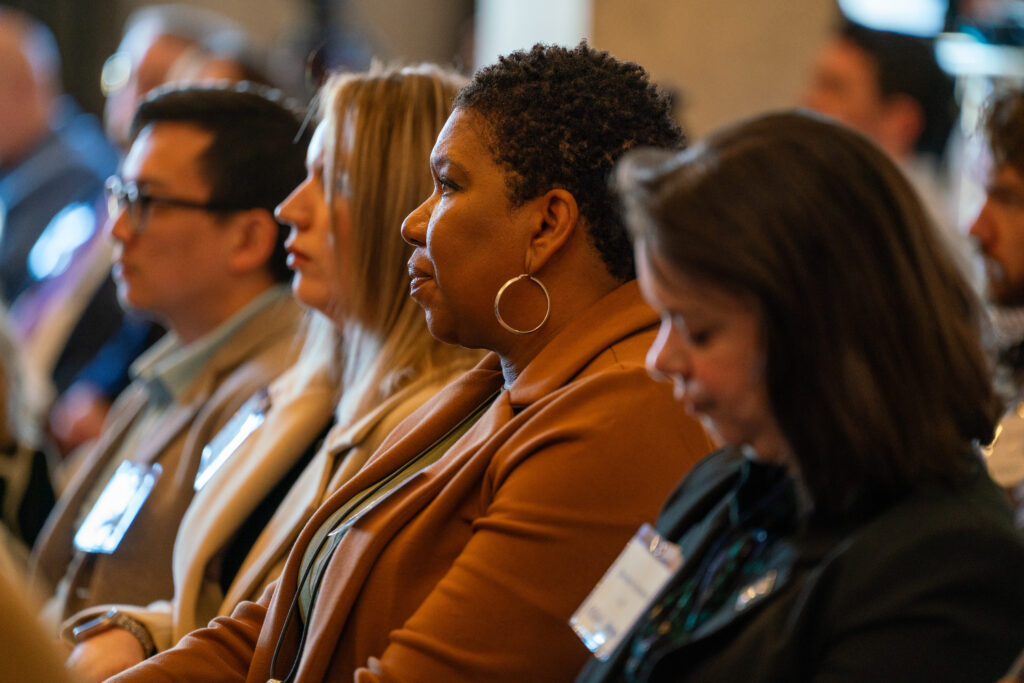
Chattanooga, Tennessee isn’t waiting for the future of AI—it’s shaping it. In partnership with Heartland Forward, EqualAI’s AI Literacy Initiative brought together leaders in Chattanooga to tackle the pressing question of what it takes for communities, schools and businesses to navigate and thrive in an AI-driven world. As a city with a strong innovative spirit and a deep commitment to expanding opportunity, we thought it was especially appropriate to bring local officials, academic leaders, industry partners and workforce advocates to share their insights and learn from the leadership and experience of Chattanooga Mayor Tim Kelly, Chattanooga CIO Jerele Neeld and education tech Founder and CEO Taylor Shead of Stemuli.
What we learned in Chattanooga echoes what we are hearing across the country: AI is shaping more of our daily lives than most people realize, yet for many it still feels like a mysterious, even intimidating, force. We’re told AI is helping make decisions about our health care, our finances, even our kids’ education, but we rarely get to see how it works or what role it actually plays. That lack of visibility, paired with the breakneck pace of AI innovation, has created a mix of curiosity, unease, and outright fear. And the data reflects that confusion: Over 74% of Americans familiar with AI say they have “very little” or “no” knowledge of generative AI tools, while 55% nationwide are at least somewhat interested in learning more, according to Ipsos. Young people are even more motivated: over 90% of teenagers want AI education in high school. The interest is there. The need is urgent. The opportunity is enormous, if we seize it.
Left unaddressed, this readiness gap threatens to widen existing socioeconomic and geographic divides. This trajectory could lead to AI becoming a powerful accelerator for the few, rather than a tool for broad-based opportunity. AI literacy is the antidote – a foundation for building trust in AI systems and ensuring that individuals can navigate an increasingly AI-powered world with confidence.
What is AI Literacy?
- Fundamental AI knowledge – A basic understanding of what AI is, when it is being used, and how it informs decisions. Recognizing that we are already using AI and becoming aware of its many applications in our daily work and personal lives. Knowing that AI fuels GPS to expedite our trips, Spotify recommendations to make the ride more pleasant, facial recognition to unlock our smart phones and algorithms to drive our news feeds and social media use.
- Critical thinking skills – The ability to question outputs, recognize limitations and evaluate AI-driven decisions.
- AI risk awareness – Knowledge of the potential pitfalls—privacy concerns, reliability issues and the broader governance challenges—and how to mitigate them through effective AI governance.
- Practical (and exciting!) applications – Adaptation of AI tools so they become a superpower to propel both key and mundane functions in our work and daily life.
AI literacy is not a luxury—it is a prerequisite for economic participation. When we understand how to leverage AI effectively, we become more competitive and productive and position ourselves for higher wages and better opportunities. AI does not replace us; it amplifies us.
But without this literacy, Americans face two equally harmful paths. Those who avoid AI altogether will miss out on opportunities for education, training or better jobs; those who use AI blindly without understanding the risks face over-reliance, errors, and unintended harms and liability. Knowledge is what makes the difference.
Despite this urgency, formal AI learning opportunities remain limited. According to Ipsos, most people are not learning about AI in school or organized training programs. Instead, they rely on self-teaching, YouTube videos, TikTok explainers or conversations with friends and coworkers. This raises essential questions:
- What happens to students who do not receive an education that includes AI literacy?
- How can we support working parents or shift workers who lack the time to pursue self-guided learning?
- How do communities with limited broadband, especially in rural areas, stay competitive in an AI-driven economy?
Without intentional investment, we risk creating a divide where only some of us can harness its benefits. To ensure every individual and community can thrive in the AI economy, we need to make AI literacy accessible, practical, and rooted in real-world needs. That is why EqualAI is working with partners nationwide—like Heartland Forward—to build locally grounded, scalable AI literacy efforts across the country.
What we focused on in Chattanooga
We wanted to hear from local leaders what kind of impact AI was having, asking questions such as:
- How is AI transforming education and work?
- What new skills are required for students, job seekers, and workers?
- How do we ensure rural communities and low-connectivity regions are not left behind?
- How is Chattanooga leading the way with AI that other cities and communities can learn from?
In a recent episode of EqualAI’s podcast “In AI We Trust?” featuring Mayor Kelly and Heartland Forward President Angie Cooper, Mayor Kelly referred to AI literacy and adoption as adding greater capacity to the workforce—almost like adding an additional paved lane to a heavily trafficked roadway—increasing our capability and capacity. Angie Cooper added, “the way people feel about AI is moving just as fast as the technology itself.” She cited recent polling conducted by Heartland Forward which indicated interest among heartlanders in learning more about AI went from 34% to 68% in just one year.
When taken together, one central theme emerged from all our discussions: No single institution—not government, not industry, not schools—can bridge the AI literacy gap alone. It requires both a public/private effort and intentional leadership.
A Path Forward: Why AI Literacy Can’t Wait
At EqualAI, we view AI literacy as non-negotiable. It’s the difference between people having agency in an AI-driven world or being sidelined by it. When people understand what AI can and can’t do—and how to use it effectively—they are better positioned to secure higher-quality jobs, benefit from this innovation, and make informed decisions about how and when to use AI in their daily lives. And AI literacy is the foundation for a future where innovation and opportunity are accessible to everyone.
Miriam Vogel is President and CEO of EqualAI, a nonprofit advancing AI governance and literacy, and co-author of Governing the Machine: How to Navigate the Risks of AI and Unlock Its True Potential. She served as inaugural chair of the congressionally established National AI Advisory Committee and hosts the In AI We Trust?Podcast. Miriam has taught tech policy at Georgetown Law, where she serves on the Board of Visitors, and is a member of the Council on Foreign Relations and a senior advisor to the Center for Democracy and Technology. Miriam was named Forbes 50 over 50 (2025) and Washingtonian Tech Titan (2023-2025).
About EqualAI: EqualAI helps companies, policymakers and institutions implement effective AI governance frameworks. We build trust in AI through practical governance solutions, widespread AI literacy, and industry collaboration. Our work connects leaders across sectors to develop standards and practices that address key challenges in AI implementation and ensure AI understanding reaches all Americans.