

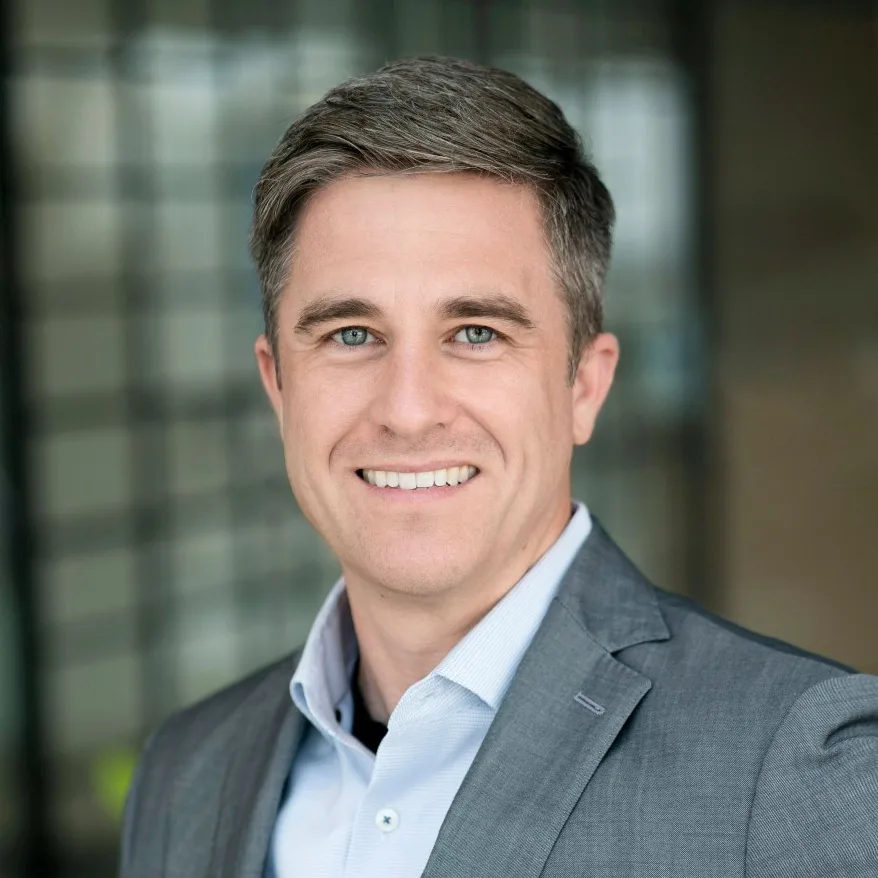
In February of this year, Brian Kelsey joined the Heartland Forward team as the vice president of programs and strategy to focus on the programmatic component—the “do” of the think-and-do-tank—of the organization’s work.
Kelsey has spent more than two decades in economic development policy and practice, seeing the field from every angle. In the private sector, Kelsey has spent time consulting on development strategies for some of the fastest growing regions in the country, both at his own firm and with EY. As an adjunct professor, he analyzed strategies for economic development from an outside perspective, and in the public sector, he has worked at the federal and local levels as a city manager and as Metro Nashville’s first-ever Chief Strategy Officer.
Brian recently sat down with Pulse of the Heartland to discuss Heartland Forward’s programmatic work, offering his insights into the organization’s unique position as a public-private convener, his outlook on the impact of current programmatic work and his goals for the future of the region.
What led you to Heartland Forward?
Kelsey: Not many organizations have the same convening power for public and private entities, maintain a talented research arm and employ a long list of experienced policy experts, all while focusing on non-coastal geographies and their opportunities and challenges. It’s a remarkably unique organization in the economic development space.
Heartland Forward’s goal to be a resource to heartland communities for economic development extends to communities that might otherwise not have access to the organization’s type of horsepower. In many ways, that’s the whole point, and what makes Heartland Forward special.
Some states and cities can deploy virtually bottomless resources to leverage their competitive advantages for economic development outcomes. In many cases, they can do that because they demand the attention of national players in the economic development game. Less populated states and cities do not have that luxury, and I’m eager to give those areas some attention in a myriad of ways. There’s great work to be done there, and it’s work that the Heartland Forward team has already begun.
Let’s dive into those existing programs. What do you believe are some of the most impactful examples of Heartland Forward’s work in heartland communities?
Kelsey: The program team has a tremendous ability to convene and connect. Connection is our responsibility, and it’s our strength. It comes at a few levels. Our program teams have no problem bringing together federal and state representatives to jumpstart progress in our impact areas. We see that with the Heartland Health Caucus and the Heartland AI Caucus. When you bring dynamic leaders into the same room, paths forward illuminate almost on the ground right in front of us. I’ll be looking forward to working with those groups to continue promoting better outcomes for our region.
But the connections come in schools, too. The more I learn about rootEd Arkansas, for example, and our work in advancing access to the skilled trades, the more impressed I am by the progress we have made in widening opportunity for the next generation of our workforce. There’s always more work to be done, but being in a growing list of 10+ schools and seeing a 66% increase in students pursuing secondary education and/or training opportunities means this program has the potential to transform the economies of participating communities.
Given your background in economic development at the city level, what excites you about the Center for Investment Readiness (CIR)?
Kelsey: CIR brings the same level of connection as our other program work. The days of a narrow approach to development are over, and we’re seeing that in how the team has rolled out CIR. The program is designed to unearth insights from across industries and do it alongside leaders from our state and local partners, as well as the private sector.
Many of these data-driven insights may not have been visible 20 years ago when building development pathways, but with our team of data experts, the holistic approach and input from community leaders themselves, they’re fixed at the center of these conversations. As leaders are searching for their community’s competitive advantages, CIR’s data visualizations are speeding up that process. What’s more, once we help to identify them, we’re having the ‘so what’ conversations that truly drive the impact.
How important is finding the competitive advantages for each of these communities?
Kelsey: Every community has a superpower–this is something I’ve learned in my time working in economic development across the region and across sectors. Heartland Forward’s work is going to help find it and propose solutions to capitalize on it. With CIR, we’re working with leaders on the data that backs up their economic advantages. In the classrooms and offices of rootEd Arkansas schools, the superpower is the program leaders and rootEd advisors expanding the horizons of countless heartland students. Our caucuses put the superpowers of dozens of dynamic heartland public officials on display.
How do you balance solving problems for communities and expanding on these superpowers?
Kelsey: Heartland Forward is a resource for communities on their path towards development. Heartland Forward solves problems. Just recently, we released Healthy Moms, Healthy Babies America — a state-led call to action to cut U.S. maternal mortality in half in five years. Health is inextricably linked to economic outcomes and growing in importance in how we think about community and economic development.
But Heartland Forward also goes a step further and helps communities hone their sharpest edges. Our work builds on community strength to multiply growth. We solve problems, yes, but the great things communities have to offer or the dynamic leaders at the helm can be leveraged to create lasting impact, too.
Down the line, when outlets are covering the impact of Heartland Forward’s programmatic work, what do the headlines say?
Kelsey: I look forward to when the headlines no longer read ‘Huge Potential in Heartland Communities’ because we’ve already worked with communities to achieve economic booms. Articles won’t be published about finding the ‘Next Austin’ or the ‘New Nashville’; each community will be taken for what makes it special, not for how it stacks up to established paths to success. I’ll be thrilled when success is the norm across the region and nobody thinks twice about heartland towns becoming a benchmark for economic advancement.