

By Robert Moran, Heartland Forward Fellow
America’s economic story is often told through the lens of those living on the coasts. Many of the nation’s highest-income communities cluster around established centers of finance, technology and federal power along the Atlantic and Pacific.
But a broader look at the country reveals another powerful story unfolding across America’s heartland. When taken together, the twenty heartland states that sit west of the Alleghenies, east of the Rockies and down the Mississippi River from the Great Lakes to the Gulf make up the third largest economy in the world.
Across this region, communities are building prosperity through advanced manufacturing, energy, aerospace, higher education, health care innovation, logistics and technology. From global medical hubs in Minnesota to aerospace leadership in Alabama and thriving innovation ecosystems in Texas, the heartland is home to a wide range of economic success stories that are shaping the future of American growth.
Heartland Forward’s Center for Investment Readiness (CIR) Data Dashboard offers a detailed look into these patterns of prosperity. The data reveal not only where economic success is occurring across the heartland, but also the distinct characteristics shared by many of the region’s strongest-performing communities.
While coastal cities continue to attract significant attention and investment, the heartland is increasingly demonstrating that economic dynamism is not confined to a single geography or industry, and that the region’s strength lies in its diverse individuality. Communities in the heartland succeed leveraging their own competitive advantages, institutional assets and industry expertise to create long-term growth.
So what can the heartland’s most prosperous places teach us about economic strength in America today? The CIR Data Dashboard provides important insights into the industries, institutions and regional characteristics helping drive growth across the nation’s core.
The Big Three
Using median household income as our first measure for discussion in this new Pulse of the Heartland series, three of the heartland’s greatest metropolitan areas quickly emerge as primary leaders – Chicago, Dallas and the Twin Cities. Chicagoland and Dallas, together are home to more than 50 Fortune 500 companies, which puts both among the nation’s leading corporate headquarters markets. While Chicagoland (30 Fortune 500 corporations1) and the Dallas metro area (22 Fortune 500 corporations2) have more corporate headquarters than Minneapolis-St. Paul, the Twin Cities generate higher median household income.
The Minneapolis-St. Paul metropolitan area is home to a state capital, an education hub and more than 14 Fortune 500 businesses, including corporate heavyweights like General Mills, Target, 3M, UnitedHealth Group, Medtronic, U.S Bancorp, Ameriprise, Thrivent and many others. Importantly, and as we discuss later in our analysis, all three metropolitan areas exhibit properties of an aerotropolis, a metro linked to the global economy by a large, international airport that functions as a center of commerce. Dallas, Chicago and the Twin Cities have airports ranked #2, #3 and #17, respectively, by 2025 passenger volume nationwide3.
The Top Ten
In this piece, Heartland Forward highlights ten standout cities across the heartland that are demonstrating exceptional economic performance, measured by median household income. Together, these metropolitan areas illustrate the diversity of development pathways emerging across America’s core while also revealing several shared characteristics that contribute to long-term prosperity.4:
| Rank | Location | 2024 Median Household Income | 2024 Population |
| 1 | Austin, TX | $100,431 | 2.6M |
| 2 | Minneapolis-St. Paul, MN | $99,833 | 3.8M |
| 3 | Midland, TX | $92,952 | 188,766 |
| 4 | Rochester, MN | $91,882 | 230,742 |
| 5 | Chicago, IL | $90,887 | 9.4M |
| 6 | Dallas, TX | $90,275 | 8.3M |
| 7 | Ann Arbor, MI | $89,180 | 373,875 |
| 8 | Madison, WI | $88,804 | 707,606 |
| 9 | Granbury, TX | $88,160 | 69,126 |
| 10 | Huntsville, AL | $85,989 | 542,297 |
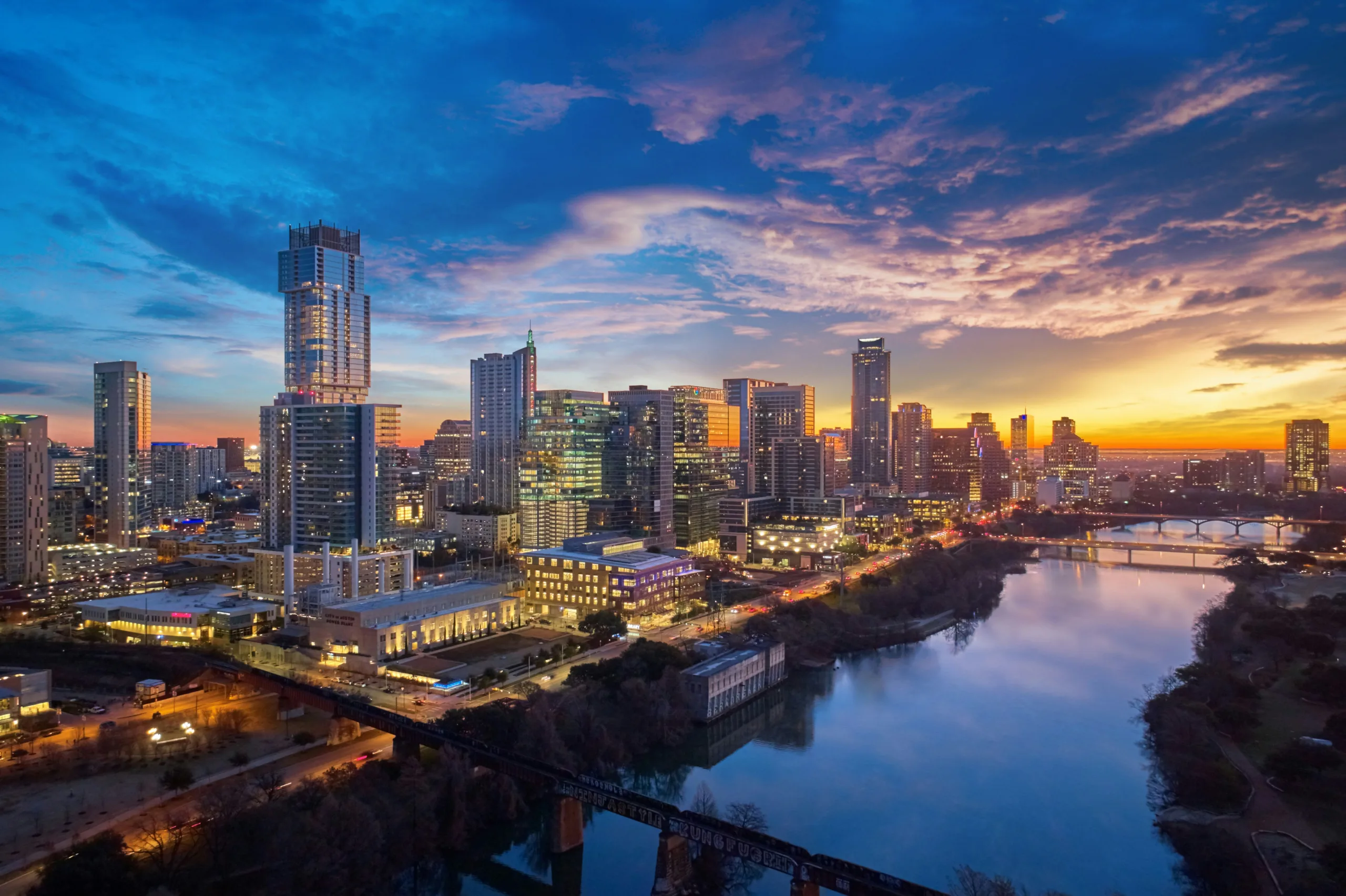
Austin, Texas ranks first among heartland communities,reflecting a combination of factors increasingly associated with modern economic competitiveness: (1) a deep talent base anchored by higher education institutions, (2) a thriving tech and startup community, and (3) the economic stability provided by state capital spending. Austin exemplifies many of the broader patterns observed across the heartland’s highest-performing regions, including strong university presence, innovation capacity and institutional density.
Minneapolis-St. Paul follows closely behind as one of the nation’s premier corporate talent hubs. The Twin Cities benefit from a highly diversified economy spanning finance, health care, consumer goods and advanced manufacturing. The region also combines the benefits of a large university presence and the state capital as an anchor institution.
Midland, Texas joins the list at number three, demonstrating the economic significance of energy, especially oil and natural gas, as an economic driver. Midland’s prosperity highlights the outsized impact that strategic industry specialization can have on regional income growth, including individual income levels, and economic dynamism across the heartland.
Rochester, Minnesota achieves the number four spot on our list, illustrating another pathway to regional prosperity: globally recognized medical and life sciences leadership powered by the world-famous Mayo Clinic. Founded in 1889 by the Mayo brothers, it now employs more than 42,000 professionals in the Rochester area, and over 80,000 globally. Rochester has evolved into a world-class center for health care innovation, biotechnology and medical research.. It is also an example of one of the insights from this research, that the heartland features a diverse array of successful development strategies, with some patterned commonalities. As biotech, AI, CRISPR gene editing and advanced medical devices supercharge our health and wellness, building global medical hubs is an appealing development strategy. The heartland has many university-backed medical centers, talent density and space to build. A key ingredient will be proximity to an aerotropolis, a city anchored to the global economy via a hub airport.
Chicago and Dallas represent the heartland’s large-scale “economic titan” metros. Both regions combine extensive corporate headquarters presence, major transportation infrastructure and deep labor markets that position them as nationally and globally connected centers of commerce. Their scale, connectivity and diversified industry bases continue to reinforce their leadership within the heartland economy. Dallas additionally displays deep aerotropolis characteristics, the second busiest airport in the nation, with over 85 million passengers in 2025.
Ann Arbor, Michigan and Madison, Wisconsin place seventh and eighth, respectively, sharing similar profiles as “univer-cities” – communities have leveraged flagship public universities to cultivate highly educated workforces, generate research activity and support entrepreneurial growth. Consider that the University of Michigan received 177 patents in 2025 and was #10 globally in university patents. The University of Wisconsin was #20 with 127 patents. Univer-cities like Ann Arbor and Madison are innovation engines, highlighting one development pathway in the heartland.
Granbury, Texas, the smallest of the communities (69,126 population) on this list, offers a different, but increasingly important, model of prosperity centered on quality of life, recreation and remote-work accessibility. Positioned in the ninth spot on this list, it is a historic and charming community located about 35 miles southwest of Fort Worth. Known as “the celebration capital of Texas,” Granbury’s growth reflects broader demographic and economic shifts reshaping portions of the heartland, where smaller communities with strong cultural identity and lifestyle advantages are attracting residents and investment.
Rounding out our top ten is Huntsville, Alabama, America’s “Rocket City” and home to the Marshall Space Flight Center, the Redstone Arsenal and many defense and aerospace contractors. Huntsville demonstrates the economic potential of industry clustering and innovation-focused workforce development, home to major aerospace and defense employers including NASA, Raytheon, Boeing, Northrop Grumman, Lockheed and Blue Origin. Economist Alfred Marshall famously observed that industry clusters become more competitive when firms, talent and adjacent suppliers create a geographically tight ecosystem. The economic boost from this aerospace cluster helped the City of Huntsville surpass the City of Birmingham as the most populous city in Alabama, an example of a 21st-century space town leapfrogging a 20th-century steel town. Huntsville may provide insights into the increasing importance of the aerospace and defense economy within the heartland’s future trajectory..
Collectively, these communities demonstrate that there is no singular model for economic success across the heartland. Rather, the region’s strongest-performing metros are leveraging distinct competitive advantages—from energy and aerospace to higher education, medical innovation and technology—to create durable, innovation-driven growth.
Insights Into Heartland Prosperity
Analysis from Heartland Forward’s CIR Data Dashboard identified six recurring characteristics shared by many of the heartland’s highest-performing communities:
1. Regional and Economic Diversity
2. Industry Clustering
3. Deep Talent Pools: “Univer-cities”
4. The State Capital Advantage
5. Energy Leadership
6. The Aerotropolis
Together, these themes demonstrate that prosperity across the heartland is not driven by a single industry, geography or development strategy. Rather, the region’s economic strength is rooted in its ability to leverage distinct local advantages and proven models for growth while building ecosystems that support long-term prosperity, innovation and resilience.
Regional and Economic Diversity
The heartland’s top ten-performing communities are located across six states, representing 30% of the region’s twenty-state footprint. These metropolitan areas stretch across both the northern heartland—including Minneapolis-St. Paul, Chicago, Rochester, Ann Arbor and Madison—and the southern heartland, including Austin, Midland, Dallas, Granbury and Huntsville. Importantly, these communities vary significantly in both scale and economic composition. Some are globally connected metropolitan centers with highly diversified economies, while others are smaller communities built around a dominant industry or institutional anchor..
Industry Clustering
As noted above, many of the heartland’s most prosperous communities are built on an industry cluster. Midland’s success is closely tied to energy production. Rochester’s has emerged as a life-sciences hub centered around the Mayo Clinic and a medical care cluster. Huntsville’s has built a nationally significant aerospace and defense ecosystem, while Ann Arbor benefits from a dense innovation economy anchored by the University of Michigan. Economists often refer to this phenomenon as agglomeration effects, where businesses, suppliers, institutions and specialized talent benefit from geographic concentration and proximity. These ecosystems create efficiencies, accelerate innovation and attract additional investment and workforce talent over time.
Massed Brainpower: Univer-cities
Higher education institutions play a foundational role in many of the heartland’s most prosperous communities. Seven of the top ten economic success stories identified in this analysis are major higher education hubs, demonstrating the economic importance of talent concentration, research capacity and innovation infrastructure.
Four of these communities–Austin, Minneapolis-St. Paul, Ann Arbor and Madison—are home to flagship public research universities that serve as anchors for workforce development, entrepreneurship and research commercialization. Institutions such as the University of Texas at Austin, University of Minnesota, University of Michigan and the University of Wisconsin provide these communities with young talent pipelines and university-supported research, discovery and business development.
Chicago and Dallas similarly host a large concentration of colleges and universities, including nationally recognized universities that contribute to innovation, business leadership and advanced research activity, such as the University of Chicago, Northwestern and Southern Methodist University.
Huntsville further illustrates the relationship between specialized talent and regional economic strength, as it is home to one of the world’s densest populations of PhD rocket scientists and the University of Alabama in Huntsville— which specializes in aerospace, engineering, physics, and computer science.
Across the heartland, these “univer-cities” highlight the economic value of concentrated human capital and the long-term advantages created by strong research and educational institutions.
The State Capital Advantage
State capitals emerge as another recurring characteristic among the heartland’s strongest-performing communities. Austin, Minneapolis-St. Paul and Madison are all state capitals anchored by major R1 research universities, while six of the top twenty communities are also state capitals – Austin, the Twin Cities, Madison, Nashville, Bismarck and Des Moines.
Many state capitals additionally function as economic engines that stack degreed employment in state government agencies and young brainpower at their flagship universities. Many of these state capitals also serve as regional medical centers, a key ingredient for the creation of a global medical hub.
Energy
Energy remains one of the heartland’s most significant economic advantages. Midland’s high ranking within the CIR Data Dashboard reflects the continued strength of oil and gas production as a driver of regional prosperity, while Dallas also benefits from the broader energy economy.
The shale oil boom and greater use of America’s massive natural gas reserves could create more heartland success stories built on this model. 21st-century innovations in solar, wind, modern nuclear and battery storage could, if concentrated in the heartland, create more energy hub cities, as well. A powerhouse energy hub city would host businesses in manufacturing, generation, distribution and storage.
The most competitive energy economies will likely extend beyond extraction or generation alone. Future energy hub cities will increasingly derive economic strength from integrated ecosystems that include manufacturing, storage, transmission, logistics and advanced energy research. Communities capable of building these interconnected networks will be well-positioned to lead the next era of American energy development.
Aerotropolis
Several of the heartland’s most economically dynamic regions can be broadly characterized as aerotropolises—communities whose growth is deeply connected to globally significant airports and transportation infrastructure. Three of our top ten CIR Data Dashboard communities can broadly be characterized this way.
An aerotropolis, an idea first conceived of by John Kasarda, is based on the insight that the most successful cities will scale via their airport as a link to the global economy. Kasarda believed that international airports, moving both humans and freight, would become the center or an alternative center of their cities. Famous aerotropolises include Amsterdam’s Schiphol airport, Incheon airport in South Korea and Dallas/Fort Worth International Airport, which sits at the center of an airline, logistics, and corporate headquarters ecosystem.
Dallas, Chicago and Minneapolis-St. Paul support significant international airports, and all three airports also function as major carrier hubs for American, United and Delta, respectively.
In an increasingly interconnected economy, global accessibility and transportation infrastructure remain critical competitive advantages. The heartland’s major aviation hubs help position the region not only as a center of domestic economic activity, but as an increasingly important participant in global trade, investment and innovation.
Insights
In summary, our analysis of the heartland’s most economically successful communities demonstrates that the region’s economic strength does not come from uniformity, but from a varied collection of communities building on what they do best.
Across the heartland’s strongest performing regions, there are concentrations of key industries such as energy, medical and life sciences, aerospace and defense, as well as technological innovation. These communities succeed not simply because of one employer or one moment of economic momentum, but because they have developed broader ecosystems that attract talent, encourage innovation and create long-term resilience.
From university-driven innovation in Ann Arbor and Madison, to the rise of next-generation energy economies in Texas, to aerospace leadership in Huntsville, the communities elevated in the Center for Investment Readiness data demonstrate that investing in human capital, institutional strength and regional connectivity creates economic advantages that compound over time.
The broader lesson is that the future of the heartland economy will not be built through imitation of coastal models, but through communities confidently building on their own competitive advantages. The places best positioned for long-term success will be those that continue strengthening industry clusters, cultivating talent pipelines and leveraging the unique assets that already exist across America’s core.
To learn more about Heartland Forward’s Center for Investment Readiness, click here.
1 https://dceo.illinois.gov/whyillinois/businessminded.html
2 https://www.dallaschamber.org/wp-content/uploads/2025/03/EDG2025-Business-MajorCompanies.pdf
3 https://en.wikipedia.org/wiki/List_of_the_busiest_airports_in_the_United_States
4 https://www.census.gov/data/developers/data-sets/acs-5year.html
5 https://mn.gov/deed/dobusiness/why-mn/our-economy/
6 https://newsnetwork.mayoclinic.org/n7-mcnn/7bcc9724adf7b803/uploads/2023/04/2022-Mayo-Clinic-Fact-Sheet-.pdf
7 https://www.dfwairport.com/business/about/stats/
8 https://academyofinventors.org/nai-announces-top-100-patenting-universities-worldwide-of-2025/
9 https://www.cbs42.com/alabama-news/huntsville-now-alabamas-largest-city-overtakes-birmingham/