

By Robert Moran, Heartland Forward Fellow
As America celebrates its 250th birthday this Saturday, Heartland Forward is looking past the headlines on political polarization and economic uncertainty to a more unifying story: across the coasts and the heartland, Americans continue to share a remarkably common understanding of what it means to be American this Independence Day.
To better understand these views, Heartland Forward partnered with Ipsos to examine their America 250 research among Americans living in the nation’s 20 heartland states. Conducted between February 25 and March 4, 2026, the survey included interviews with 4,692 Americans nationally and 1,825 respondents in the heartland, providing one of the most detailed snapshots of public opinion as the country approaches this historic milestone. This survey research has a margin of error of +/- 1.48 percentage points at the 95% confidence level nationally and +/- 2.39 percentage points in the heartland. Heartland Forward’s analysis of this polling explores the commonalities that exist between geographic regions and highlights the unifying elements still vibrant across the U.S.
More Than A Birthday
For many respondents in the heartland the semiquincentennial is more than simply another birthday. Forty-four percent of respondents in the heartland say America’s 250th birthday feels like an important achievement to them personally. Older generations are more likely to find meaning in this weekend’s festivities. Fifty-one percent of respondents in the heartland aged 50 to 64 personally feel that America’s 250th birthday is an important achievement, as do 61% of respondents in the heartland 65 or older. While not everyone expresses a strong personal connection to the anniversary, nearly half see it as a meaningful national moment to celebrate the enduring ideals of America.
Common Identity
Perhaps more importantly, the research finds that respondents in the heartland continue to believe Americans should share a common national identity. Half of heartland respondents (49%) say it is extremely or very important that people living in the United States share common values and beliefs about what it means to be an American. When those who say it is “somewhat important” are included, that number rises to an impressive 80%.
In an era often characterized by polarization, that finding suggests broad agreement that while Americans may disagree on policies and politics, a shared civic culture remains both possible and desirable. The survey also reveals considerable consensus about what those shared values actually are.
Universal Principles, Founding Documents, Voting, & Hard Work
When asked what is important to being an American, respondents in the heartland placed enduring democratic ideals at the top of the list. Eighty-three percent say believing in freedom, justice and equality is important to being an American and 82% emphasize treating people from all backgrounds equally. We still hold these truths to be self-evident.
These findings are notable because they demonstrate a commitment to universal principles as defining characteristics of American identity.
Seventy-one percent of respondents in the heartland say understanding the Constitution, the Declaration of Independence and the Bill of Rights is important to being an American. Virtually the same percentage (70%) believe voting in elections is an essential part of American identity.
Additionally, respondents in the heartland identified with one of the most durable features of the American story: hard work. Sixty-five percent say “trying to get ahead through one’s own efforts” is an important part of what it means to be an American. Long before the phrase “American Dream” entered the national lexicon, the belief that individual effort could improve one’s circumstances helped define the country’s identity. The survey suggests that belief remains deeply rooted today.
American Identity
National identity is also important on a personal level. More than half of respondents in the heartland (52%) agree that “being an American is an important part of how I think about myself.” That figure matches respondents on the East Coast and exceeds the 46% reported on the West Coast. Similarly, 63% of heartland-based respondents say they feel a strong sense of connection with other Americans around the country.
These findings suggest that despite political disagreements, many Americans continue to experience national identity as something meaningful and unifying rather than merely symbolic.
American Symbols and Icons
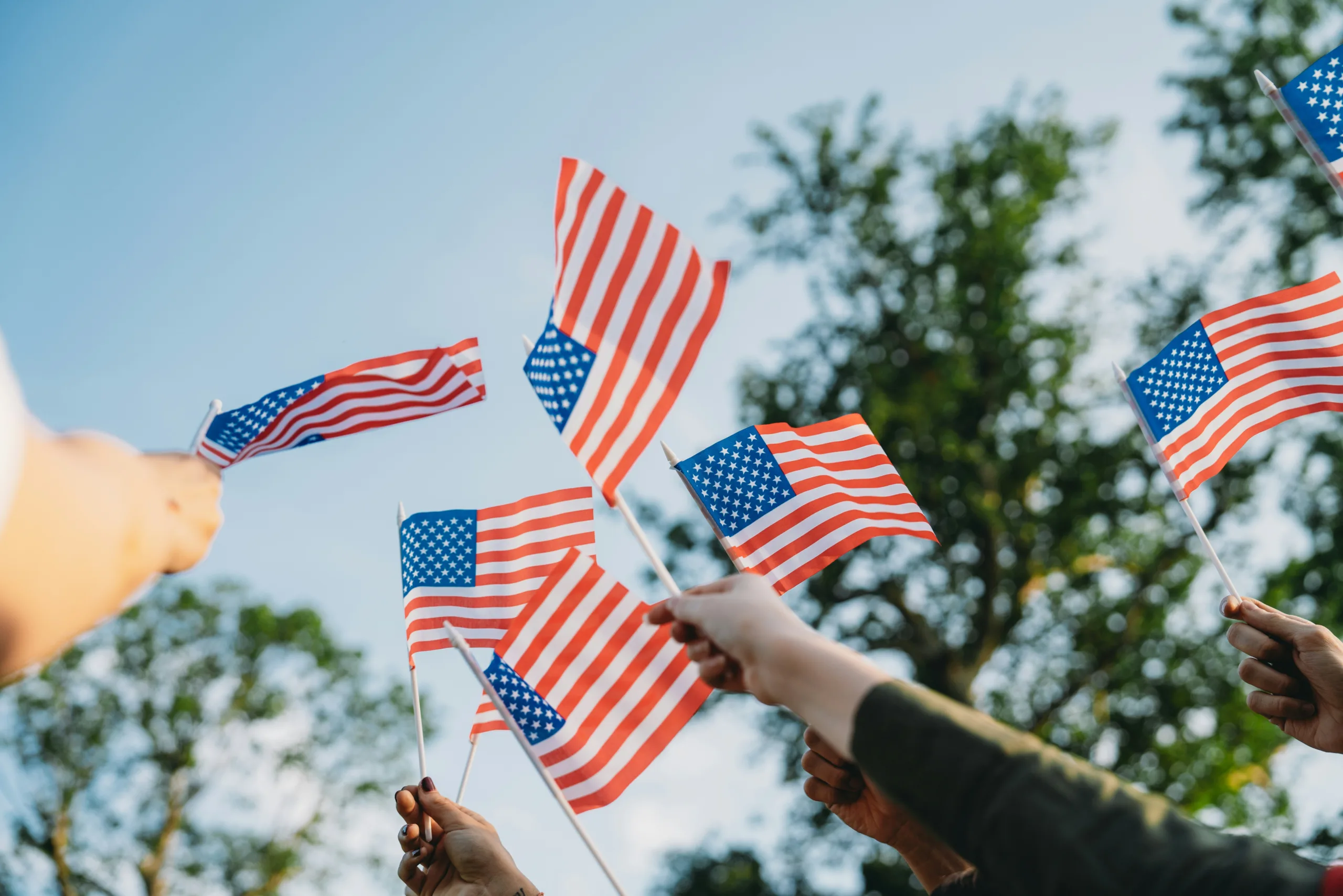
But symbols are important too. The heartland is the region most likely to view flying the American flag as an essential part of American identity. Forty percent say flying the flag is an important expression of what it means to be American, compared with 37% on the East Coast and 29% on the West Coast. In the heartland the importance of the flag grows with age. Forty-eight percent of respondents in the heartland ages 50 to 64 feel that flying the flag is important, and that number grows to 51% among those 65 and older. Given the regional importance of the flag, it’s therefore not a surprise that one of the largest American flag factories is located in the heartland, in Coshocton, Ohio.
When asked which images they most associate with America, the American flag stands alone. Nearly three-quarters of respondents in the heartland (74%) identify it as one of the nation’s defining symbols. The Statue of Liberty follows at 52%, while the bald eagle (29%), the White House (26%)and the U.S. military (26%) round out the five most frequently cited national symbols.
Equally revealing are the moments when we feel most connected to one another.
Connection: Celebration, Hardship & Elections
Respondents in the heartland report experiencing the strongest sense of national connection during celebrations such as Independence Day and Thanksgiving (38%), during an unexpected national tragedy (34%) and while participating in elections (33%). These moments represent very different aspects of American life—celebration, hardship and democratic participation, but each are touchstones reminding citizens that they belong to something larger than themselves.
As America approaches its 250th birthday, this research suggests unifying themes across the country. Respondents in the heartland continue to embrace freedom, equality, constitutional government, civic participation, hard work and national unity as defining features of American identity, gathering under the flag, celebrating national holidays, voting and volunteering, worshiping and looking to the nation’s founding principles as sources of common purpose.
The challenges facing America are real. But Heartland Forward’s analysis finds remarkable consensus around the ideals that have sustained the country for nearly two and a half centuries, values that may prove to be one of America’s greatest strengths as the nation builds toward its next 250 years.