

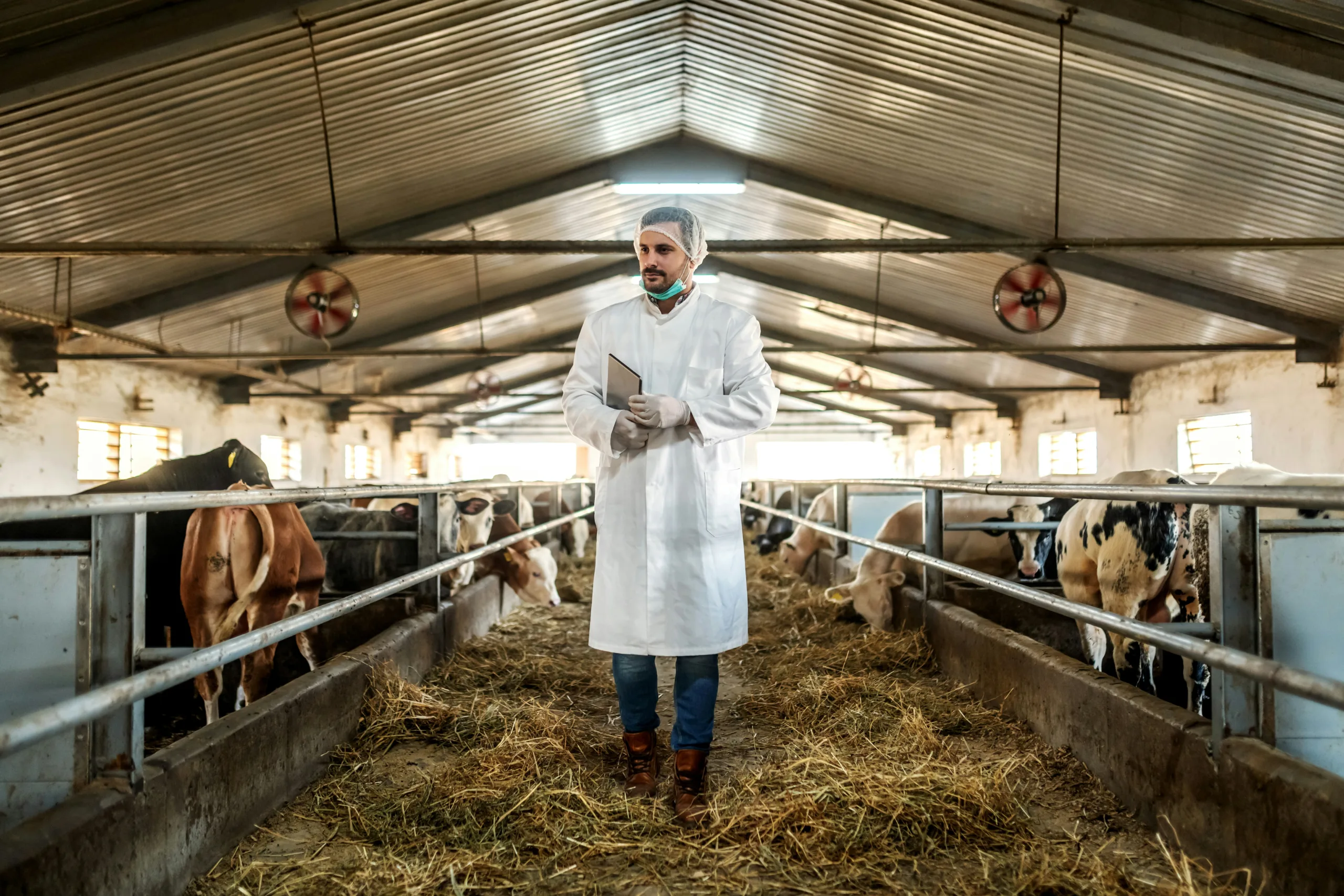
Jody Kull has firsthand knowledge about the necessary connection between rural veterinarians, rural economies and a safe, affordable food supply. Jody is an assistant professor at Penn State University’s veterinary school, and she spent nearly 20 years as a practicing veterinarian and business owner in a rural community. “I saw the impact that a veterinarian makes in a community and, more importantly, the impact that happens when that veterinarian is not available when I transitioned to academia,” Jody says. “A veterinarian provides a unique and necessary function in agriculture-driven economies, not only ensuring animal health, but also monitoring zoonotic diseases, detecting vector prevalence and ultimately, protecting human health.”
Today, about 500 rural counties across 44 states do not have enough veterinarians to meet the needs of the agricultural industry, according to the U.S. Department of Agriculture, and a large majority of these shortage regions are located in the heartland. The economic and public health impact of this issue is significant. Veterinary services are critical infrastructure for the livestock industry, which is a major economic engine for countless micropolitan and rural areas nationwide. In addition to supporting animal health, veterinary professionals also protect the well-being of humans, serving as detectors and first responders for zoonotic diseases that can cross between animals and people.
In spite of their impact, actually becoming a veterinary practitioner in a rural area can be a uniquely challenging and lonely experience. Young professionals and aspiring veterinarians face a number of challenges that can prevent them from building long-term, meaningful careers in the industry, including financial pressures stemming from high levels of student debt, heavy workloads and the need to evolve skills to meet changing needs from the livestock and poultry industries. Over the long term, these stressors have created shortages of veterinarians in rural areas across the country, as many young professionals seek more lucrative opportunities in urban and suburban settings and choose not to focus on livestock.
“It can be professionally isolating to be in a rural environment far from veterinary colleagues and resources, and it is difficult to have long-term success in a community without a sense of belonging in an area,” Jody says. Addressing the nationwide shortage of veterinarians requires preparing students to tackle these challenges before they ever leave school. “It is critical to support, provide resources and create options for students in communities, and ensure that they are successful in the long term with business support, financial support and veterinary mentoring.”
Addressing Systemic Challenges: How it Works
Over the past several years, Farm Journal Foundation has been working to address workforce shortages in the veterinary industry across the rural heartland, first and foremost by recognizing that this is a systemic issue. Our experience has shown that many factors contribute to this challenge, so there isn’t a single, silver-bullet approach. As such, our program uses three interconnected areas—Community Readiness, Coalition Building and Education—to create pathways for positive and scalable regional transformation.
Establishing Community Readiness
Many rural communities across the country need veterinarians, but these communities often do not offer an environment that can holistically support professionals and their families and enable them to build sustainable livelihoods. Because of this, Farm Journal Foundation created its Community Readiness initiative, which works with state and local stakeholders to clearly define regional shortage areas and build support for veterinary livelihoods in local communities. Using a research-centric, data-driven approach, our program quantifies the economic need for veterinary services and levels of support required for a financially sustainable veterinary practice, making recommendations to local communities about how to create environments where veterinarians can build fulfilling long-term careers.
Building Coalition Among Leaders
In conjunction with our Community Readiness work, Farm Journal Foundation also engages with multi-sector stakeholders through our formal Veterinary Workforce Solutions Mapping Group.
This coalition of leaders helps identify systemic challenges within the rural veterinary sector and serves as an advisory group for our programmatic work. Our Mapping Group is composed of more than 60 member organizations, representing veterinary practitioners, academia, government and the private sector.
Among the many important opportunities identified by Mapping Group members was the need to provide young people with positive exposure to rural veterinary careers and to help students prepare early for the demands of these careers. Importantly, this message needed to reach both rural and urban students to broaden the understanding of agricultural careers. This insight directly led to our highly impactful Veterinary Workforce Solutions Educational Program.
Developing and Expanding Educational Programs
Farm Journal Foundation’s Veterinary Workforce Solutions Educational Program seeks to inspire young people to embark on food-systems veterinary careers and provide them with the personal and professional skills they need to build businesses in rural areas. Through this initiative, we have developed an educational platform that is now in use across 20 universities, including 15 in the heartland, and a growing number of high schools across the country. This platform includes interactive e-learning modules and instructor-led content geared appropriately for high school students, pre-vet undergraduate students, veterinary students and early career practitioners. Content complements students’ traditional science-based classroom learnings, and covers a range of issue areas, including career opportunities in livestock veterinary services, the role of veterinarians in rural communities, veterinary business practice management, navigating the veterinary school experience and more.
Looking to the Future
Farm Journal Foundation’s work is gaining traction, and we are inspired by all of the dedicated partners who have come onboard with us to help solve this critical workforce issue. As we look ahead, we are now exploring how the evolution of technology can positively support rural economies. Considerations include how we can continue to leverage our program management, peer-reviewed research and data capabilities to scale successful programs to positively impact economies in the Heartland. We are considering adding new layers to the work of our Veterinary Workforce Solutions Mapping Group to explore the expanded use of AI solutions, telemedicine and other emerging technologies into rural veterinary practices. The needs of the rural veterinary workforce will continue to evolve as practitioners’ contributions are recognized not just as caretakers of animals, but as drivers of economic growth, food security and public health.
Tricia Beal is the CEO of Farm Journal Foundation, a farmer-centered nonprofit, nonpartisan organization working to advance rural economic development, agricultural innovation, conservation and global food and nutrition security. Farm Journal Foundation’s mission is to bring together stakeholders from across the agricultural spectrum—including farmers, students, industry leaders and policymakers—to create tangible solutions to some of the biggest challenges facing the food and agricultural value chain today.