

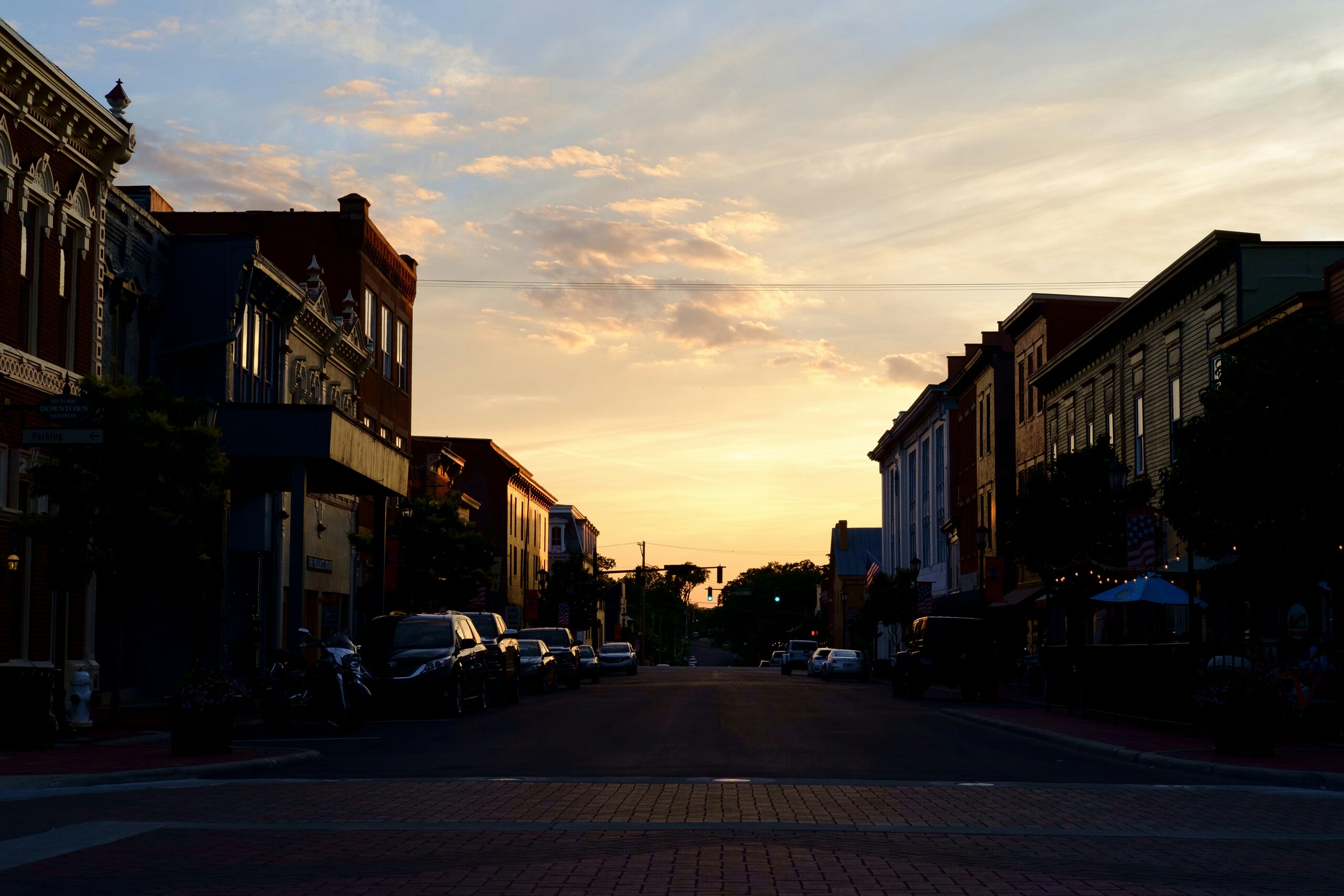
Hutchinson, Kansas makes up the heart of what researchers call a “micropolitan” area in the center of the state, along the Arkansas River. Since 2025, Heartland Forward’s Center for Investment Readiness (CIR) has worked with local leaders in Hutchinson to help track data about their region’s economy and identify opportunities for investment and growth. More than 60 percent of the nation’s 538 micropolitan areas—small communities with a core of 10,000 to 49,999 residents that can include a broader network of surrounding towns and counties, with total populations reaching approximately 270,000 residents—are located in the heartland, where they anchor manufacturing, agriculture, health care, logistics and energy industries, and serve as economic hubs for the rural regions around them.
Together, heartland micropolitans like Hutchinson generate $810 billion in economic output, about three percent of U.S. gross domestic product (GDP). They are also critical to accelerating even more economic growth across the middle of the country and closing a sizable gap in investment between the heartland and the coasts.
While making up 39 percent of the country’s population and roughly 35 percent of U.S. GDP, heartland communities receive only about 10 percent of total U.S. venture capital investment and 29 percent of fixed capital lending.
New joint research from Heartland Forward and the McKinsey Institute for Economic Mobility examines how communities can prepare to close that investment gap. Released in October 2026, America’s Next Growth Opportunity: An Investment-Ready Heartland introduces an investment readiness framework and the Investment Readiness Guidebook to help communities understand how prepared they are to attract new investment and maximize positive outcomes. The report will help drive CIR’s work and its goal to work with 30 heartland communities by 2030.
Micropolitans like Hutchinson are a core part of drawing new investment. McKinsey analysis found that approximately 63 percent of $1 trillion in announced advanced-manufacturing investment is expected to go to facilities within 15 miles of rural communities. Despite that incoming investment, communities that share similar industries, workforces and geographic advantages often see very different outcomes from that investment.
The report finds that differences in outcomes between communities, such as job growth and new business creation, are not necessarily due to differences in the assets that those communities possess, but rather in their ability to organize those assets into investable opportunities. To that end, the America’s Next Growth Opportunity report and guidebook help smaller communities understand the conditions that shape their ability to attract, deploy and sustain investment, including:
- Economy, which looks at the industry base, workforce, infrastructure and access to capital that determine how a community can compete and grow.
- Community, which covers a community’s identity, demographics and quality of life, including housing, K-12 education, caregiving, health care access and livability.
- Coordination, which assesses whether government, investors and community organizations can align around shared priorities and follow through.
Communities can assess their conditions across the framework and assign individual readiness components to one of three profiles:
- Organic or opportunistic, for communities with some momentum but a mainly reactive approach to investment opportunities
- Targeted engagement and retention, where core elements are in place but a defined strategic approach and coordination is still needed
- Economy-shifting investments, where structural and institutional capacity supports transformational investment and the challenge is to build additional growth paths.
Understanding a community’s readiness profile is the first step toward understanding its areas of strength and opportunities for improvement.
“Our research with Heartland Forward suggests that attracting capital is only part of the equation,” said Nora Gardner, senior partner at McKinsey & Company. “Communities also need the economic foundations, community assets and institutional coordination to translate investment into sustained growth.”
In Hutchinson, the CIR team partnered with the Hutchinson/Reno County Chamber of Commerce to develop a data dashboard in March 2025. Through that engagement, the chamber was able to take a closer look at its housing stock and determine what types of new housing was most needed. They then used that information to advocate for a first-of-its-kind, state-funded program to build modular homes for the surrounding county. Affordable, modular housing could be built at volume on a single site and then transported to the areas around Hutchinson County where they were most needed. State lawmakers found the argument compelling, and this April a bill was signed into law to make the program a reality.
“Communities across the heartland have the assets, talent and potential to attract investment. The key is making a clear case for why investors should take a closer look,” said Angie Cooper, president of Heartland Forward. “Our work with the McKinsey Institute for Economic Mobility gives local leaders practical tools to understand their strengths, identify where to improve and prioritize what to tackle first to ensure their community is best positioned to thrive.”
Learn More
- Heartland Forward’s Center for Investment Readiness works with communities across the region to attract investment and build long-term growth.
- The framework, community case studies and an investment readiness checklist are available in America’s Next Growth Opportunity: An Investment-Ready Heartland.