

And what it tells us about health care clustering.
By: Robert Moran, Heartland Forward Fellow
Some of the country’s most respected health care can be found in the heartland, from the Mayo Clinic in Rochester, Minnesota, to a regional care network in Ada, Oklahoma, that serves much of the south-central part of the state. Using the Center for Investment Readiness (CIR) dashboard, Heartland Forward analyzed communities across six measures of health care capacity and identified 15 all-stars that show how strong access to care takes root
Access to quality care is a priority for heartland residents. In Ipsos research commissioned by Heartland Forward, 31% of heartland residents said their community lacks access to quality health care, compared with 27% elsewhere in the country. The all star communities show what it takes to close that gap.
The dashboard ranks the top 25 heartland communities in six categories, each measured per 100,000 residents: primary care physicians, pediatricians, OB-GYNs, mental health providers, hospital beds and Federally Qualified Health Centers (FQHCs). No single measure tells the full story on its own, but together they offer a broad picture of where care is concentrated. Communities that placed in the top 25 at least three times earned all-star status.
Tier 1
Ada, Oklahoma stands alone in the first tier, ranking in the top 25 in five of the six categories: (1) pediatricians per 100,000 (#12), (2) OB-GYNs per 100,000 (#14), (3) mental health providers per 100,000 (#10), (4) hospital beds per 100,000 (#8), and (5) FQHCs per 100,000 (#14). Ada is a regional care hub serving many rural counties in south-central Oklahoma, helped by the Chickasaw Nation’s investment in health care and a workforce anchored by Mercy Hospital Ada. Together, these institutions have created a health care ecosystem that serves a population far larger than the city itself.
Tier 2
Seven communities make up the second tier: Rochester, Minnesota; Iowa City, Iowa; Ann Arbor, Michigan; Kalamazoo, Michigan; Yankton, South Dakota; Shreveport, Louisiana and Clarksdale, Mississippi.
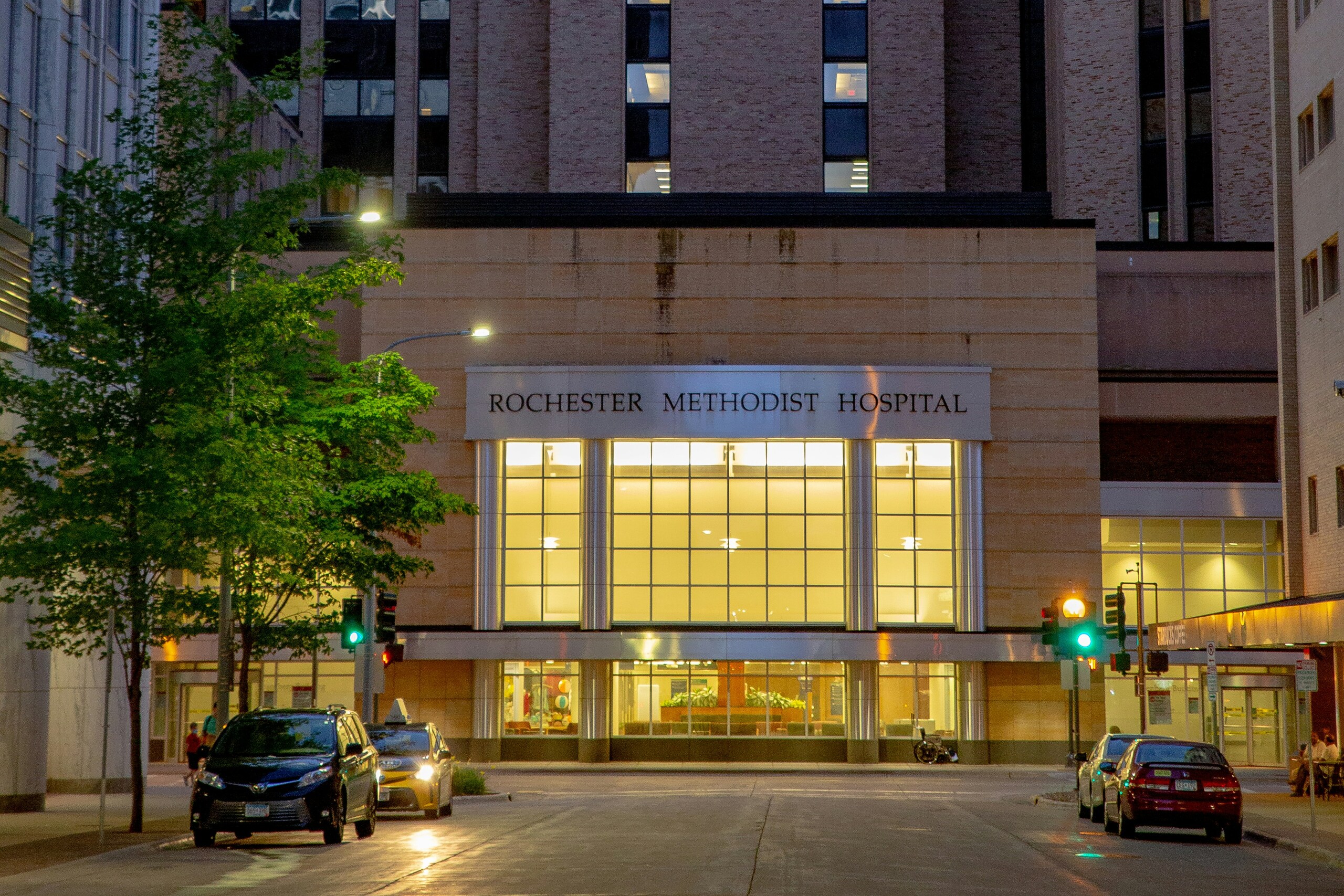
This tier illustrates the importance of university-backed medical schools, the power of functioning as a global medical destination and the strength of rural care hubs. Four of these cities are home to university medical schools: Ann Arbor (University of Michigan Medical School), Iowa City (University of Iowa College of Medicine), Kalamazoo (Western Michigan University School of Medicine) and Shreveport (LSU Health Shreveport School of Medicine). Rochester, previously highlighted in Heartland Forward’s research, “Heartland Thriving: A Look at the Prosperous Places in America’s Core”, is home to the Mayo Clinic and its Alix School of Medicine, making it perhaps the most mature health care cluster in the heartland. Yankton and Clarksdale round out the tier as rural health care hubs, each serving a region far larger than its own population.
Tier 3
Seven communities make up the third tier: Springfield, Illinois; Pierre, South Dakota; Pikeville, Kentucky; Gallipolis, Ohio; Alexandria, Louisiana; Johnson City, Tennessee and Columbia, Missouri. This tier is characterized by state capitals, rural care hubs and medical schools. Springfield and Pierre, the capitals of Illinois and South Dakota, serve as natural health care hubs. Pikeville, Gallipolis, Alexandria and Johnson City are regional referral hubs for rural areas, and Columbia hosts the University of Missouri School of Medicine.
Drivers of Health Care Clustering
Three factors set all-star communities apart: regional care centers serving large rural areas, medical school hubs and the same clustering effect Heartland Forward has identified in other industries, such as aerospace in Huntsville, Alabama, with specialized economic activity concentrating in tightly networked clusters rather than spreading out evenly, and health care is no exception.
10 of the 15 all-star communities operate as regional care centers for much larger rural areas, from Ada, Oklahoma to Clarksdale, Mississippi to Yankton, South Dakota. At least five host large, university-backed medical schools that anchor their local health care cluster, creating a critical mass of medical professionals, young medical talent and investment. Together, these forces help explain why health care is difficult to distribute evenly: physicians, hospitals, specialists, residency programs and medical schools reinforce one another through powerful network effects, and once enough assets accumulate in one place, they attract additional providers, investment and patients.
Rather than being distributed evenly across the heartland, health care capacity concentrates in identifiable regional clusters that emerge where rural referral networks, university medical schools and major health care institutions reinforce one another over time. For policymakers, the lesson may not be to replicate every service in every community, but to strengthen and expand the regional hubs that already anchor care for surrounding rural populations. As the Rural Health Transformation Program brings new federal funding to the region, these 15 heartland communities offer a model for where and how that investment could go furthest.