

From AI infrastructure to water availability, the forces driving investment in 2027 play to the heartland’s strengths, and the communities that prepare now will be best positioned to lead.
By: Robert Moran and Brian Kelsey
Across the heartland, the next chapter of economic growth is already taking shape as data center campuses are rising, new defense and advanced manufacturing facilities are breaking ground and communities from Ohio to Oklahoma are leveraging emerging technology to compete for what comes next. As 2026 draws to a close, Heartland Forward has identified ten trends that will shape economic development in America’s heartland in 2027, along with the opportunities they create for policymakers, economic developers, site selectors, investors and business leaders.
Heartland Forward developed the list of trends by examining the social, technological, economic, environmental and political forces driving change across the region. The resulting trends range from AI infrastructure and reshoring to water availability and site readiness. The full list, also available as an infographic, includes:
- AI and Digital Infrastructure
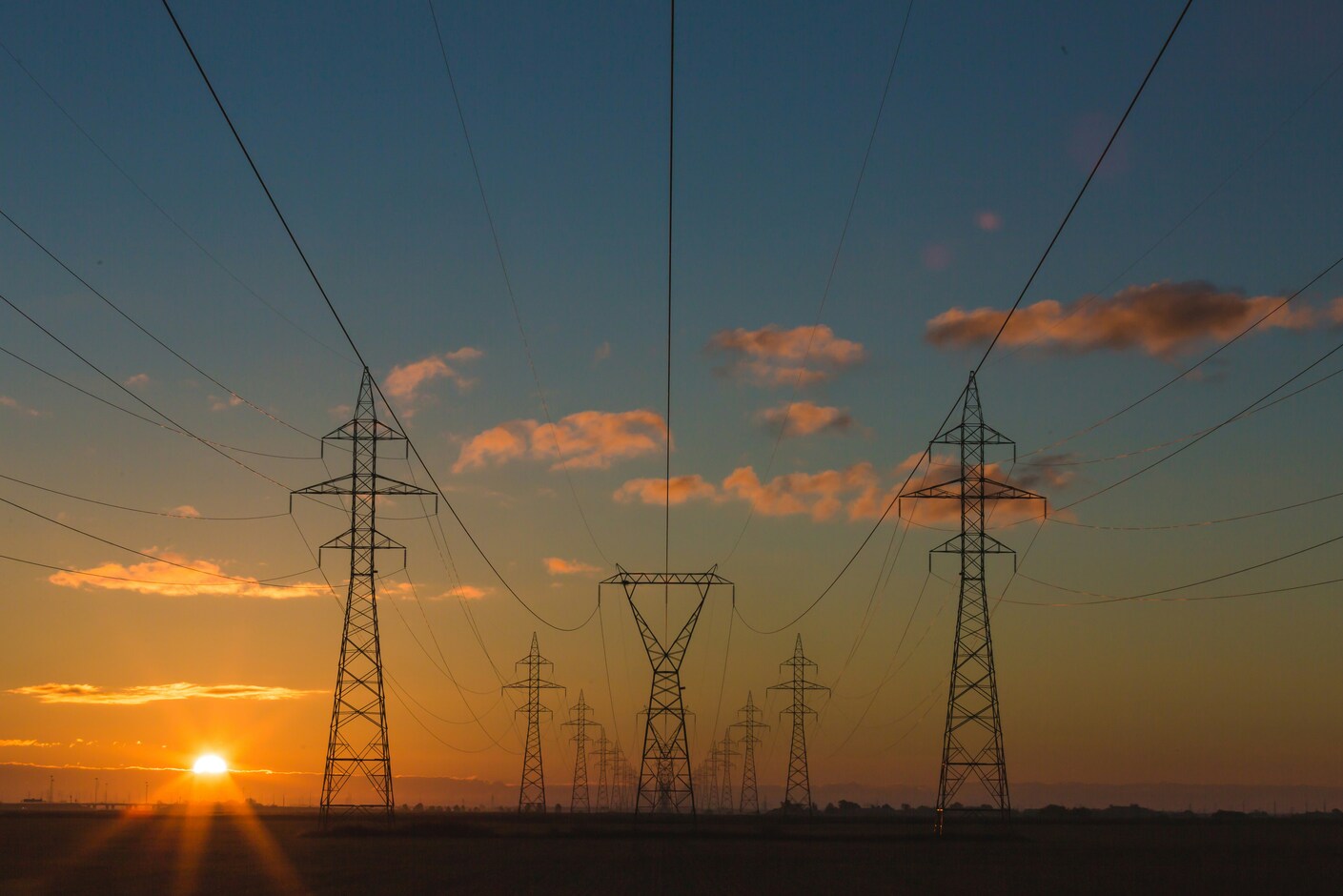
- Electricity Generation
- Reshoring and Secure Supply Chains
- Skilled Workforce
- Rural Investment Readiness
- Energy Diversification and Industrial Power Supply
- Universities as Economic Engines
- Talent Attraction & Retention
- Water Availability
- Site Readiness
1. AI and Digital Infrastructure
Like the railroads, the interstate highway system and the internet, America is building the infrastructure for its next technological era, and the heartland is positioned to capture a significant share of that investment in 2027. The Federal Reserve estimates that total data center investment could reach between $360 billion and $930 billion by the third quarter of 2027, with a middle scenario of $600 billion. The American Institute of Architects (AIA) consensus forecast projects 24.7 percent year-over-year growth in data center construction in 2027, while Associated Builders and Contractors (ABC) projects 18 percent growth.
Much of that investment is headed to the heartland. The U.S. Energy Information Administration (EIA) has identified four grid regions serving the heartland as areas that should anticipate significant growth in data center demand: MISO (the Midcontinent grid, serving 15 of the 20 heartland states), ERCOT (Texas), PJM (the Mid-Atlantic grid, which also serves Ohio and Kentucky) and the Southwest Power Pool (serving 11 heartland states).
An analysis of operational, under-construction and announced data centers ranks seven heartland states among the top 20 nationally for data center investment: Texas (#1), Ohio (#6), Illinois (#7), Indiana (#13), Iowa (#14), Minnesota (#17) and Missouri (#19).
2. Electricity Generation
Reliable electricity has become a core economic development asset. As demand grows, the ability to deliver power on a project’s timeline now matters as much as the availability of a site itself. The U.S. Energy Information Administration forecasts electricity consumption of 4,211 billion kilowatt-hours in 2027, up almost 2 percent from 2026. AI infrastructure is the key driver: Goldman Sachs Research estimates that data center power demand could more than double, from 31 gigawatts in 2025 to 66 gigawatts in 2027.
In 2027, heartland communities that can add generating capacity, keep electricity prices stable and meet or exceed projected load growth will be best positioned to win new projects.
3. Reshoring and Secure Supply Chains
Geopolitics and America’s focus on economic security will be major growth drivers for the heartland in 2027 and in the years to come. Supply chain security and domestic manufacturing are now core pillars of America’s defense and economic strategy, and the heartland is well positioned to capture an outsized share of this growth. Research from Heartland Forward and the McKinsey Institute for Economic Mobility released in October 2026 found that more than 60 percent of announced advanced manufacturing investment is located in the heartland. Reshoring manufacturing to America’s core strengthens national resilience by locating production in a more secure part of the country. In many ways, this builds on the heartland’s long industrial legacy. Nine of the top ten states in Business Facilities’ automotive manufacturing rankings are in the heartland, as are seven of the top ten states in its future automotive hubs rankings.
Defense investment is another important driver, with significant defense industrial base investments in Ohio, Arkansas, Indiana, Alabama and Oklahoma. Anduril is developing a five-million-square-foot manufacturing campus in Pickaway County, Ohio. Hanwha Defense is developing a new munitions facility at the Army’s Pine Bluff Arsenal in Arkansas. Lockheed Martin has made significant investments in interceptor missile and munitions facilities in Alabama and Kratos Defense is investing in hypersonic and directed energy development in Indiana. In Oklahoma, a state with a long history in defense production, Leidos is constructing a 300,000-square-foot facility. The most prominent example of defense investment driving heartland growth is the relocation of U.S. Space Command (USSPACECOM) to Huntsville, Alabama, which ranked #10 in Heartland Forward’s Heartland Thriving analysis and was named a Secret Sauce winner at the 2026 Heartland Summit.
4. Skilled Workforce
As competition for advanced manufacturing grows, the technical skills of a region’s workforce are becoming a deciding factor. A 2024 study by Deloitte and the Manufacturing Institute estimates that U.S. manufacturers will need 3.8 million workers by 2033, and that many of those roles could go unfilled without stronger talent pipelines. The Manufacturing Institute also projects strong demand for technicians. As Deloitte’s 2026 Manufacturing Industry Outlook notes, if reshoring accelerates, the supply of skilled workers could become increasingly strained. That creates a clear opportunity for communities that invest in strong, career-focused training programs to help meet growing demand.
5. Rural Investment Readiness
Rural and micropolitan communities have significant room to grow their share of national investment by strengthening their investment readiness and building capacity in infrastructure, site readiness, workforce training, quality of life and permitting. America’s Next Growth Opportunity: An Investment-Ready Heartland, released in October 2026 by Heartland Forward and the McKinsey Institute for Economic Mobility, found that while the heartland generates roughly 35 percent of U.S. GDP, it receives about 10 percent of national venture capital investment and 29 percent of fixed capital lending, a gap that represents one of the region’s largest growth opportunities. Heartland Forward’s Center for Investment Readiness is helping communities seize it, with a goal of working with 30 heartland communities by 2030 and partnering with states across the region.
Rural communities are diverse, and many are working to attract and retain residents as their populations age faster than the rest of the country. Quality of life is emerging as a powerful lever. A Brookings Institution symposium on America’s rural future found that “Quality of life investments should be seen as a foundation for economic growth rather than an outcome.” Access to health care is a core part of that foundation. The federal Rural Health Transformation Program is investing $50 billion in rural health systems from 2026 through 2030, and every state received a first-year award. Through the Heartland Health Caucus, Heartland Forward is helping states and communities drive lasting progress on maternal and child health, mental health and health workforce shortages.
6. Energy Diversification and Industrial Power Supply
As electricity demand grows, communities will increasingly compete on the diversity, stability and accessibility of their industrial power supply. For example, the American power generation mix is now 40.8% natural gas, 24.1% renewables, 17.7% nuclear, and 16.6% coal. The nation’s power mix will continue to evolve. Regions with a diverse and stable generation mix will have stronger and more resilient platforms for growth, and investment will flow to regions with abundant and diverse generation. This is not only a regional competitive advantage. It is a national security imperative. J.P. Morgan’s Security and Resiliency Initiative (SRI) is just one example of a solution in this space, a $1.5 Trillion, 10-year plan to facilitate, finance and invest in industries critical to national economic security and resiliency. Generation is one half of the equation. The other half is transmission, a significant national challenge. Grid congestion and transmission capacity are likely to be key factors, and regions that expand transmission capacity early will be best positioned to keep growth moving.
7. Universities as Economic Engines
Higher education institutions play a foundational role in many of the heartland’s most prosperous communities. Heartland Forward’s Heartland Thriving analysis found that seven of the region’s ten most prosperous communities host an R1 university. Top-tier universities build human capital, commercialize research and incubate startups, and the heartland is home to a large network of state-supported universities. Harnessing these economic engines will be a key growth lever for state and local leaders across the region.
8. Talent Attraction and Retention
The heartland’s ability to attract, develop and retain talent will be decisive for its long-term economic growth and for the strength of America’s core economy. Effective strategies reach across the full workforce, including workers without four-year degrees, those in the trades, credential holders, technicians and college graduates. Many heartland states are already putting these strategies into practice, and Heartland Forward’s rootEd program, run in partnership with rootEd Alliance, helps rural students build a plan for life after high school graduation. rootEd advisors have now served more than 100,000 rural students nationwide, including in heartland states such as Arkansas, Missouri, Texas, Illinois and, as of this academic year, Oklahoma. Nationally, rootEd schools have seen a nearly 30 percent increase in students pursuing postsecondary education or career training and 54 percent fewer students pursuing low-skill, low-wage jobs.
9. Water Availability
Reliable water supply and wastewater infrastructure will be an increasingly important factor in attracting water-intensive industries, including heavy industry, food processing, chip manufacturing and data centers. As of this writing, Drought.gov estimates that 35 percent of the lower 48 is in drought, affecting 84.6 million Americans. Communities that invest in water resiliency will hold a meaningful competitive advantage, making it an essential priority for the heartland’s economic future.
10. Site Readiness
Communities will increasingly stand out to site selectors by offering construction-ready sites with appropriate zoning; power, water, sewer and high-speed internet service; transportation access; completed environmental review; and the ability to meet aggressive delivery timelines. Site readiness may seem basic, but investment-ready communities treat it as a competitive advantage, removing friction before a project ever arrives.
Looking Ahead
In 2027, economic development in the heartland will be shaped by transformative investment in AI infrastructure, power and water capacity, geopolitically driven reshoring, talent and investment readiness. At the most basic level, the drivers are technology, power and people. State tax policy remains an important part of the equation: four of the top ten states in the Tax Foundation’s State Tax Competitiveness Index (South Dakota, Texas, Tennessee and Indiana) are in the heartland. But tax competitiveness is one factor among many. The AI infrastructure buildout, growing power and water needs, reshoring and shorter supply chains, and related defense investment in America’s core are likely to be the dominant drivers of heartland investment in 2027. The heartland states and communities that prepare now to make the most of these trends will be best positioned to lead in the year ahead.
Learn More
- Heartland Forward’s Center for Investment Readiness works with communities across the region to attract investment and build long-term growth.
- Read America’s Next Growth Opportunity: An Investment-Ready Heartland from Heartland Forward and the McKinsey Institute for Economic Mobility.
- Explore the heartland’s most prosperous places in Heartland Forward’s Heartland Thriving analysis.